Kenya’s County Budget Transparency Survey
Exploring Sub-National Budget Transparency in Kenya


The County Budget Transparency Survey (CBTS) is one of the few consistent and comprehensive transparency initiatives conducted at the subnational level worldwide.
Through assessing the availability and comprehensiveness of key budget documents that counties are legally mandated to publish, decision-makers and citizens alike are able to assess and track how governments are availing information on the management of public finances at the sub-national level in Kenya.
Explore Budget Transparency in 2025
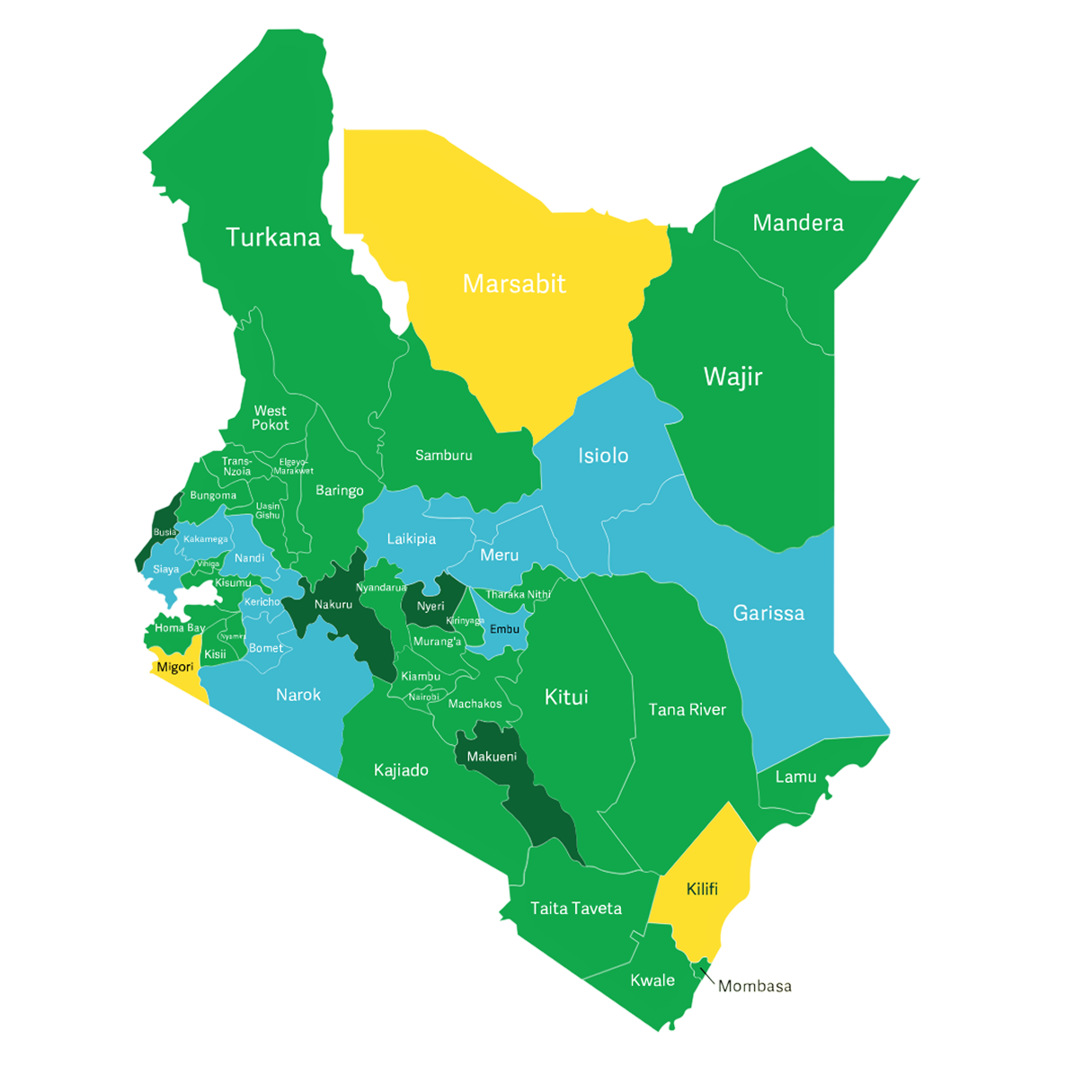
Click on your county to see how they performed in 2025.
Bajeti Hub’s Performance Scale
Counties
Alternatively, select one of the 47 counties below to view and download a report.
Key Findings
There has been significant improvement in county budget transparency since 2020.
This has been driven by great progress in the number of budget documents counties are making available and the modest gains in the quality of information contained county budget documents.
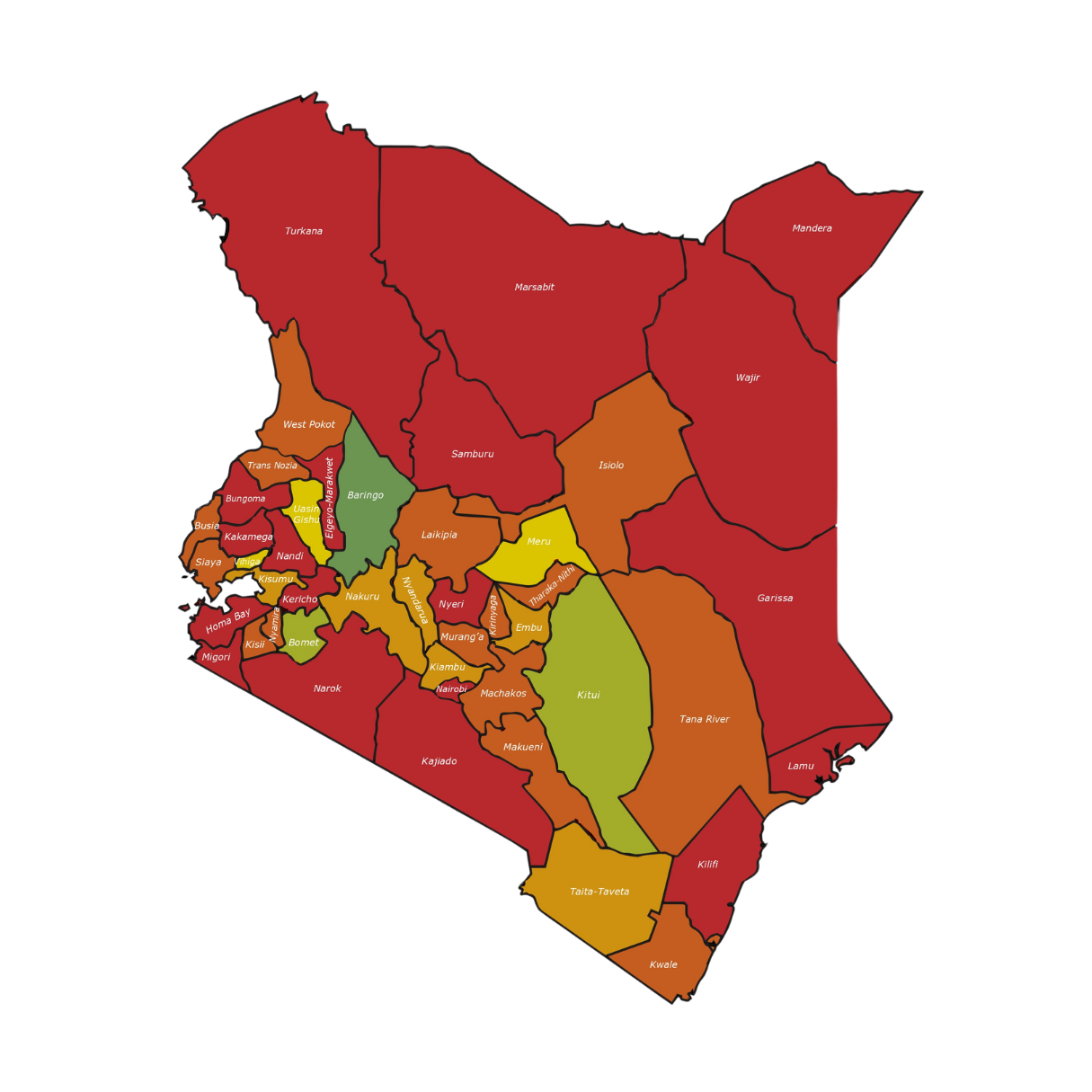
2015
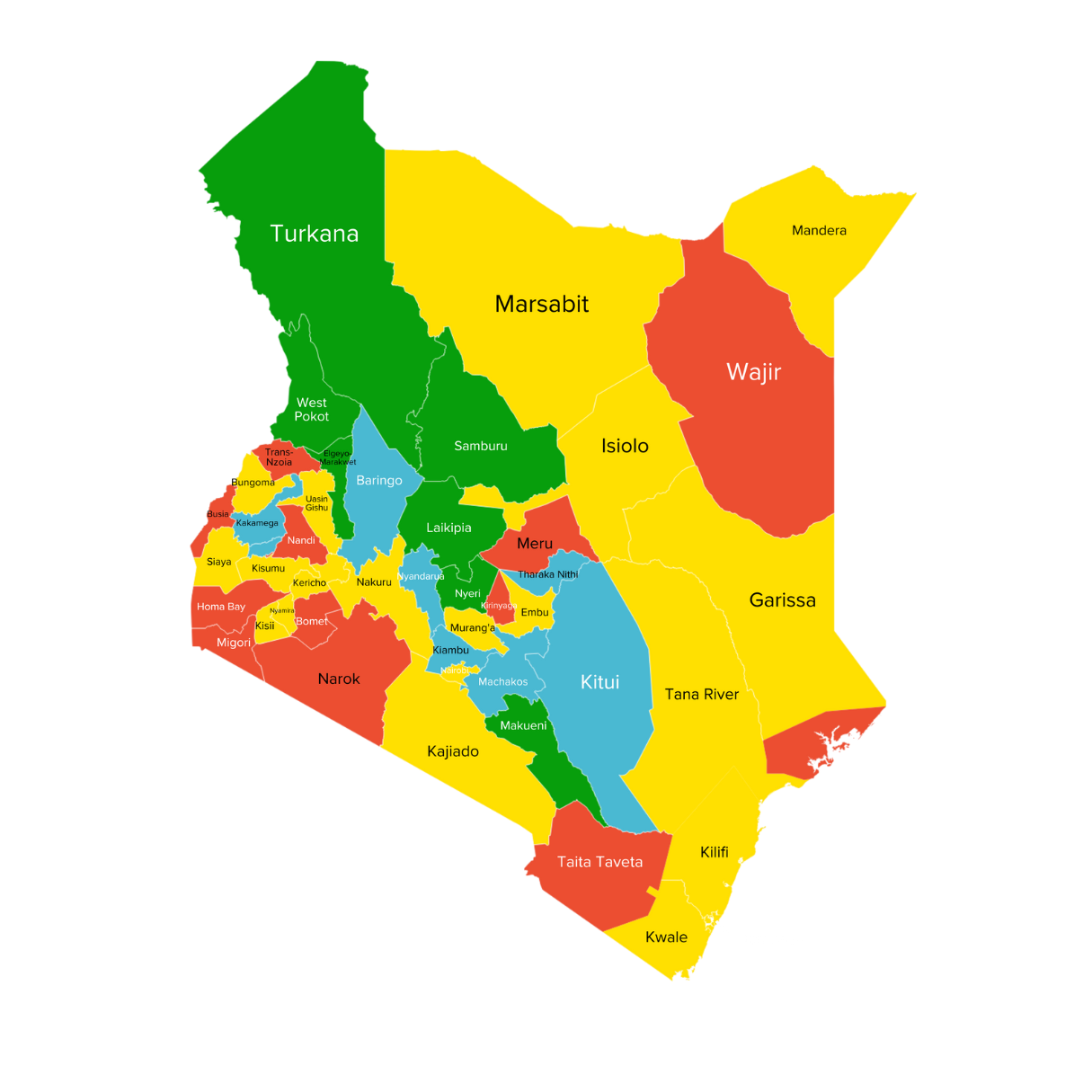
2020
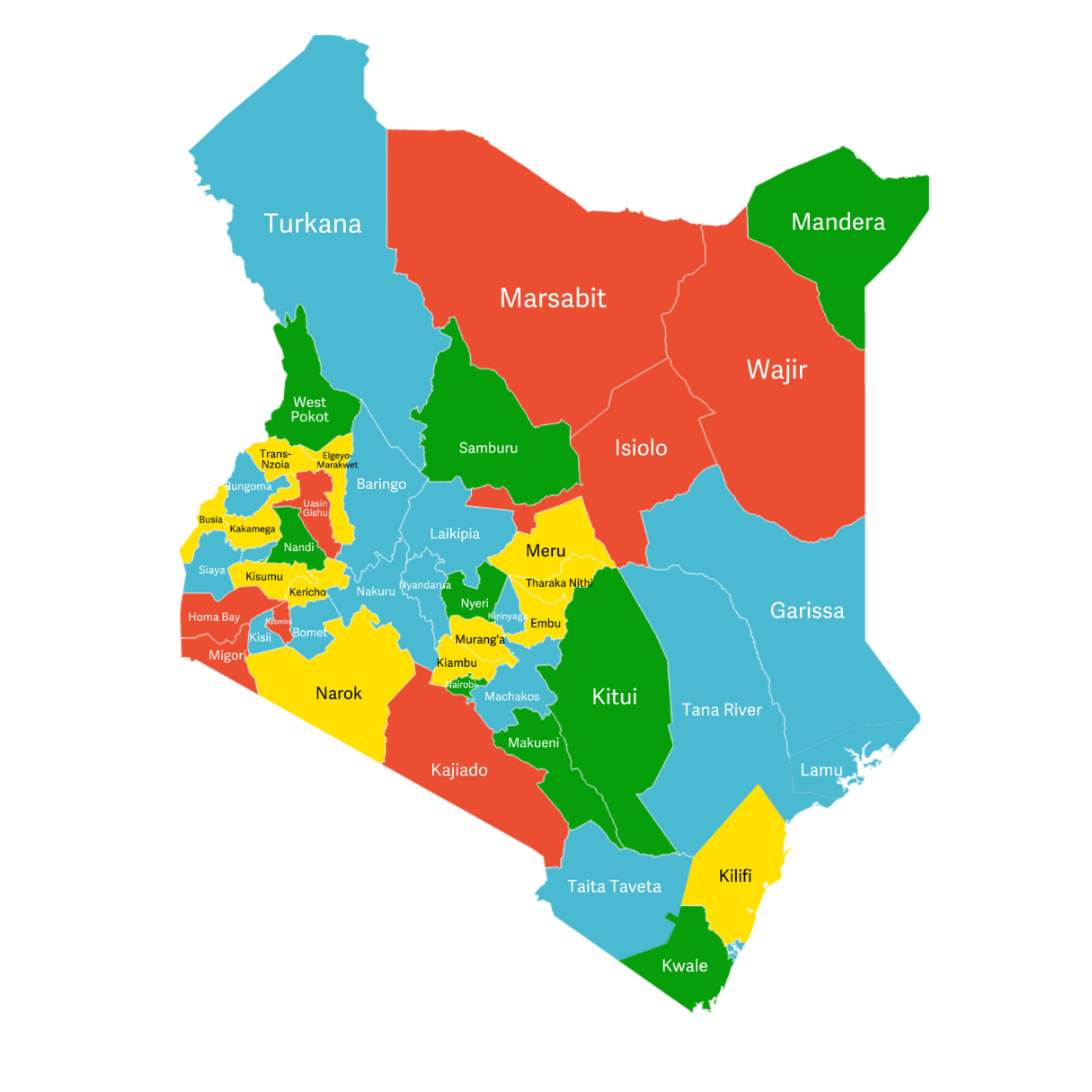
2022
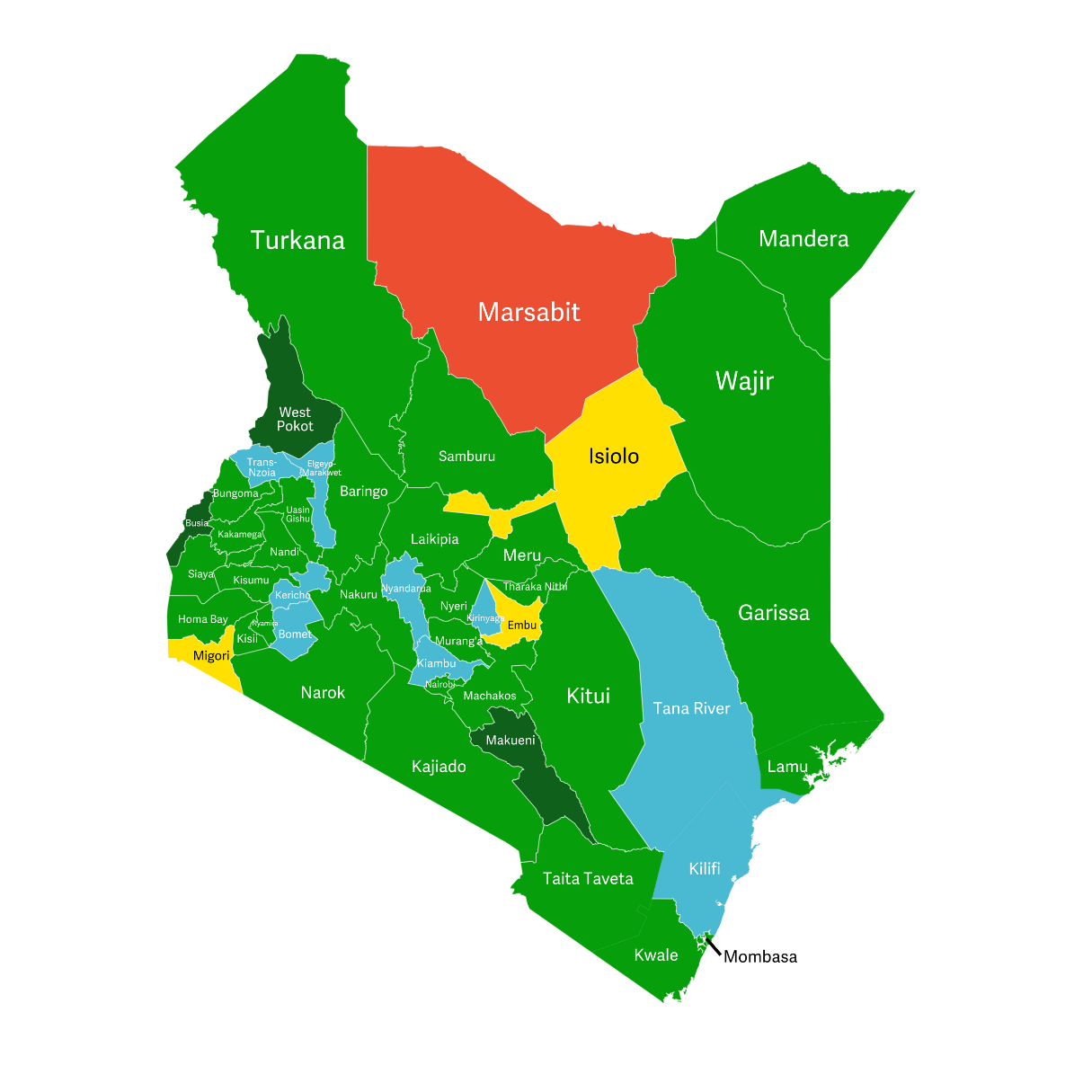
2024
2025
Bajeti Hub’s performance Scale
The overall CBTS 2025 score stands at 65 out of 100 points, a 1-point improvement from CBTS 2024.
In the 2025 survey, 36 counties scored above 60 points, compared to 34 counties in 2024, signaling that high transparency performance is becoming the norm rather than the exception, with more counties crossing into the upper tier of the index.
Timeliness in publishing budget information emerged as the weakest aspect of budget transparency in CBTS 2025.
While counties recorded a high document availability rate of 88%, only 23% of the required budget documents were published within the timelines prescribed under public finance laws.
Citizen Budgets continue to be both the least published and the least comprehensive budget documents.
Although 35 counties published Citizen Budgets, the documents contained, on average, only 40 out of 100 points of the required budget information, significantly limiting their usefulness in enabling citizens to effectively understand, engage with, and monitor county budgets
Counties recorded notable progress in disclosing information related to public participation, although overall performance in this area remains relatively weak.
In CBTS 2025 counties improved from 12 out of 100 score in CBTS 2024 to 23 out of 100. Notably, 26 counties published public participation reports and 25 counties improved the quality of feedback provided to citizens.
From Advocacy to Impact: How Sustained Commitment to Budget Transparency Enhances Service Delivery in Nakuru and Kitui Counties
While budget transparency is sometimes perceived as a mere compliance exercise, the CBTS has demonstrated its critical importance to citizens. It enables meaningful public participation, empowers citizens to fulfill their oversight role, and, most importantly, contributes to improved service delivery.
This video highlights how effective collaborations and partnerships between civil society organizations and county governments have driven lasting progress in budget transparency, ultimately resulting in better services for communities. Drawing from the successes achieved in Nakuru and Kitui Counties in Kenya.
Bajeti Hub Partners









Get Involved
Find out more about Bajeti Hub.